
Research Participation

Ellen Zocher, a senior Biology major, prepares a petri dish full of the roundworm C. elegans to be examined under a higher power microscope.

Grad student Sarah Peterson, left, and Alejandro Acevedo-Gutierrez heading towards Bird Rocks in Rosario Strait, San Juan Islands, to tag harbor seals in order to record their diving behavior and movements. Photo by Kenady Wilson.

Western Washington University graduate student Rachael Mallon shows off a bright pinkish red sample of watermelon snow after collecting it in July 2017 at Sahale Peak east of Marblemount.

PSRF divers prepare to release juvenile abalone on the rocky reef systems of the San Juan islands
Getting Involved in Research in the Biology Department
Research experience is valuable for a number of reasons: it deepens your learning in a particular field of study; it teaches you how you can apply your biological knowledge to real world questions; it introduces you to cutting edge scientific techniques; it prepares you for success as a professional scientist; and it is highly valued by employers and professional/graduates schools. Participation in research can also lead to presentations of research at scientific meetings or co-authorship on professional research publications.
Undergraduate students can register for research credit or work as a volunteer. For qualifying students, research opportunities may also be possible through the work-study program; make sure to let your prospective research advisor know of your eligibility. You and the faculty member agree upon the number of research credits, the nature of your activities in the lab, and the expectations for your involvement as a professional on the research team.
Students interested in joining a research group should:
- Find a faculty member or graduate student who is doing research that interests you. An easy way to do this is to check out the Biology Department Faculty Directory to get a sense for the kinds of research their groups do.
- Once you’ve decided whose group you are interested in, reach out to the faculty member directly, in person or by email!
- Don’t be discouraged if there isn’t an available opportunity in a particular lab when you first inquire! Opportunities and openings may arise in the future, and there is a broad array of labs both in Biology and in other Departments at Western that are worth checking out. Also consider internship and volunteer opportunities outside Western at other academic institutions (e.g. via the NSF REU program), government agencies, non-governmental organizations, or private companies and industry (Check out Handshake). Research experience outside of WWU may be eligible for internship credit (BIOL 496 Professional Work Experience).
Summer Undergraduate Research Program (SURP)
The Summer Undergraduate Research Program (SURP) is a 10-week program that provides students performing research in the Biology Department an opportunity to grow as scientists and engage in a scientific and social community through paid summer research support, professional development activities, and mentorship in scientific communication. While the curriculum has been designed to support and increase community across summer undergraduate researchers, we invite any undergraduates entering the summer before their final year or quarter of study to apply for financial support to fund their research activities full-time. Students accepted to the paid internship will receive up to $6000 for the summer and will be required to participate fully in the program.
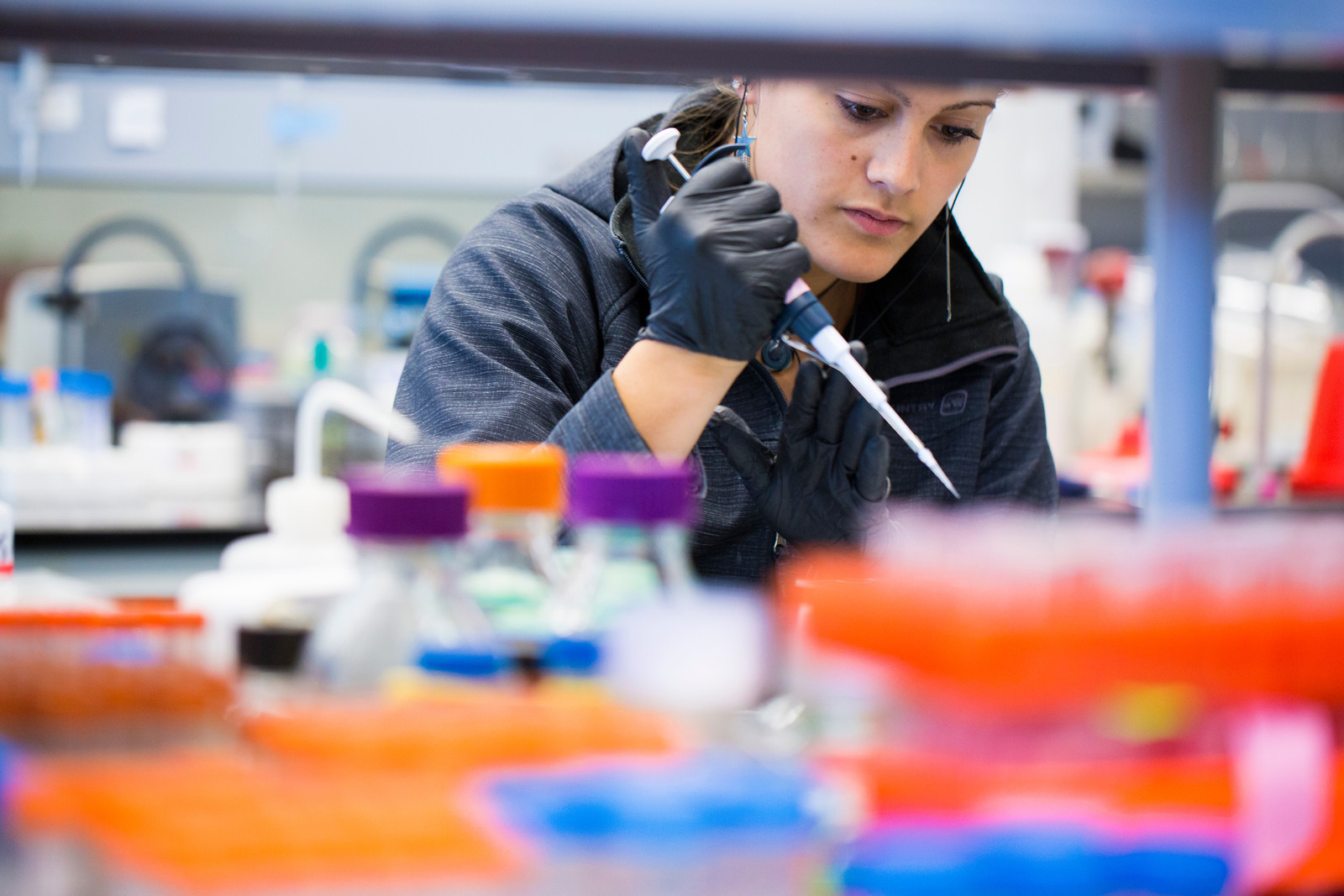
The program will run across 10-weeks of the summer, with weekly sessions in which Biology faculty provide hands-on training and facilitation of such topics as: Research Ethics, working effectively with mentors, framing and presenting research questions among others. Previous summers have also included field trips to visit academic and industry labs in Seattle as well as networking events with Western Alumni currently working in the field. Students will also receive guidance on production of a scientific poster communicating their research to be presented at a lively fall Biology Research Poster Session.
Students who are interested in being kept up-to-date on SURP 2024 events and activities please email Biology@wwu.edu to request to be added to the SURP email list. Please see below for application information for the paid internship. Application due date is March 3, 2024.
Program Benefits
- Hands-on Experience
- Funding for students to get paid to do research over the summer
- A cohort-based community to connect and socialize with faculty and students performing research at WWU
- Networking opportunities with scientists and researchers throughout western Washington
- Professional development opportunities
Student Eligibility
- Enrolled as a WWU student in Fall 2024
- Affiliated with a Biology lab at time of application
- Preference will be given to students with financial need
Expectations of Student Awardees
- Conduct research for up to 40 hrs/week, or 375 hrs in Summer 2024
- Participation in all SURP program activities and events,
- Present a research poster based on their project during the Fall 2024 quarter.
Application Process: By Sunday, March 3rd, 5pm PST, student applicants should submit a PDF document to Biology@wwu.edu with the following:
- Full name, anticipated graduation date, Biology lab in which research will be conducted during Summer 2024
- Responses to essay questions - see below for details
- A letter from the research mentor - see below for details
Evaluation Process: Selection of students for funded participation in the program will be performed by the SURP Review Committee, and will be based upon the eligibility of the applicants, attempts to maximally distribute funded students across labs in the Biology department, and scores derived from the equal weighting of essay answers and mentor letter. See below for Evaluation Criteria.
*Committee members will recuse themselves from evaluation and discussion of their own mentees
Evaluation Criteria:
Student Essay Prompts
Please provide short answers to the following questions (<150 words each). Each answer will be evaluated on a scale of 0-2 pts.
- Motivation: Why are you interested in exploring research as a career?
- Problem solving: Finding accurate information is difficult. Describe how you find accurate information.
- Resilience: Science requires persistence, perseverance, and a lot of trouble-shooting as research doesn’t always turn out as one expects. Describe an example from your own experience that speaks to your ability to persist and persevere in the face of a challenge.
- Research Question: Describe your research project for this summer and your planned contribution to it.
- Financial Need (optional): Describe any financial need that underlies your motivation to apply for these awards.
Mentor Letter
The letter should describe mentor commitment to your mentee and the SURP program rather than the qualities of your mentee. Each section addressing the points below will be evaluated on a scale of 0-2 pts.
- Mentoring plan: Briefly describe your mentoring and support plan for the student applicant.
- Participation: Briefly state your commitment to contributing to the development and implementation of SURP activities. This should include your availability and interest in collaboratively planning and designing the 2024 program beginning in Spring quarter and facilitating SURP activities.